
Management selection is best guided by sector-based analysis. To ensure all contributory factors are addressed, the Tri-Sector Assessment framework (Table 4) incorporates:
1) Joint Pathology: Detailed clinical examination (crepitus, swelling, instability, imaging findings). Classification of disease stage to inform likely prognosis and intervention.
2) Pain Pathology: Discriminates acute vs. chronic, peripheral vs. central, adaptive vs. maladaptive. Considers behavioural alterations, allodynia, and hypersensitisation.
3) Pathology of Disablement: Assesses physical function: strength, muscle atrophy, endurance, gait. Incorporates owner-based measures and objective metrics (goniometry, metrology).
Table 4 Tri-Sector Assessment
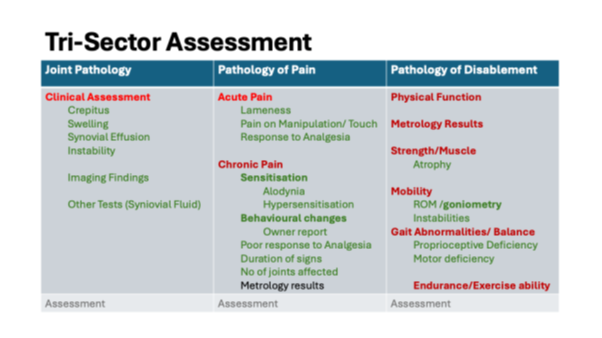
Taken together, the Tri-Sector Assessment ensures the care plan is as individualized and comprehensive as possible. Each sector includes controllers (rapid-acting treatments), consolidators (medium-term support, regenerative ideas), and maintainers (lifestyle and monitoring) (see CCM System).
Interventions, structured by sector, include the full spectrum of modern veterinary OA therapy:
- Intra-articular Pathology: Injections (hyaluronic acid, PRP, stem cells), anti-inflammatories, disease-modifying drugs, surgical modification.
- Pain Pathology: NSAIDs, piprants, monoclonal antibodies (such as bedinvetmab), central acting agents (gabapentin, amantadine), acupuncture, photobiomodulation.
- Disability (Function): Rehabilitation protocols, controlled exercise, joint mobilisation, proprioceptive/balance training, lifestyle and environmental modifications.
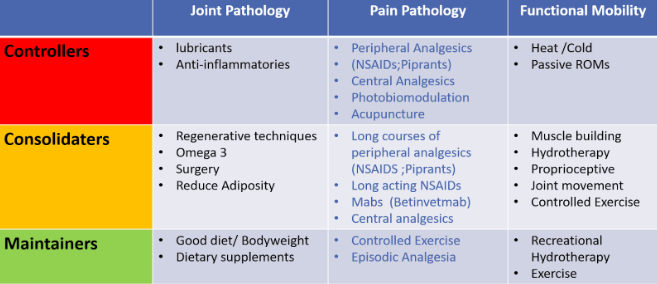
Using Tri-Sector Assessment and CCM System in combination to plan management (Tables 5;6)
Table 5 Identifying targets for management
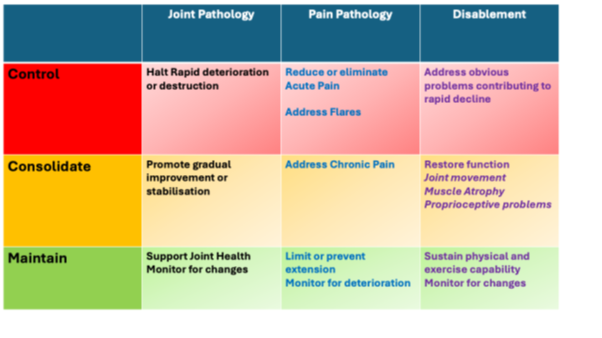
Table 6 Identifying Management options which meet target objectives
OA management is inherently multimodal, meaning optimal outcomes require combined therapies rather than reliance on a single modality. This may involve combinations such as:
- NSAID (pain/anti-inflammatory) + structured exercise + dietary management.
- Regenerative medicine (if indicated) + physiotherapy/hydrotherapy + owner education.
Employing the appropriate “toolbox” mixture according to sector, clinicians can create multimodal, patient- and client-centred plans. Beyond the animal, the caregiver’s environment, routine, and education must adapt to facilitate compliance and optimal disease control.